09.2022 – 02.2023
The "Ott-Pausersche Fabrik"
The project is dedicated to providing contemporary information about the industrial monument of the silverware museum of the "Ott-Pausersche Fabrik" in Schwäbisch Gmünd.
- Exhibition Design
- Augmented Reality
- Application Design
- Exhibition Design
- Augmented Reality
- Application Design
Context
The recent history of Schwäbisch Gmünd is marked by the silver and goldsmith business. The "Ott-Pausersche Silberwarenfabrik" was important for this. After more than 140 years of production, this was discontinued after the death of the last owner in 1984.
Since 1992, the factory has been a unique museum location that radiates a special atmosphere and allows visitors to travel to a bygone world. This project work is dedicated to a contemporary revision of the mediation method of the current exhibition in order to make the far-reaching history of the place more tangible and experiential. The focus is on retaining the charm of silence, abandonment and originality. Through our created application for smartphones, the significant history of the place can now be imposingly grasped even without a guided tour.
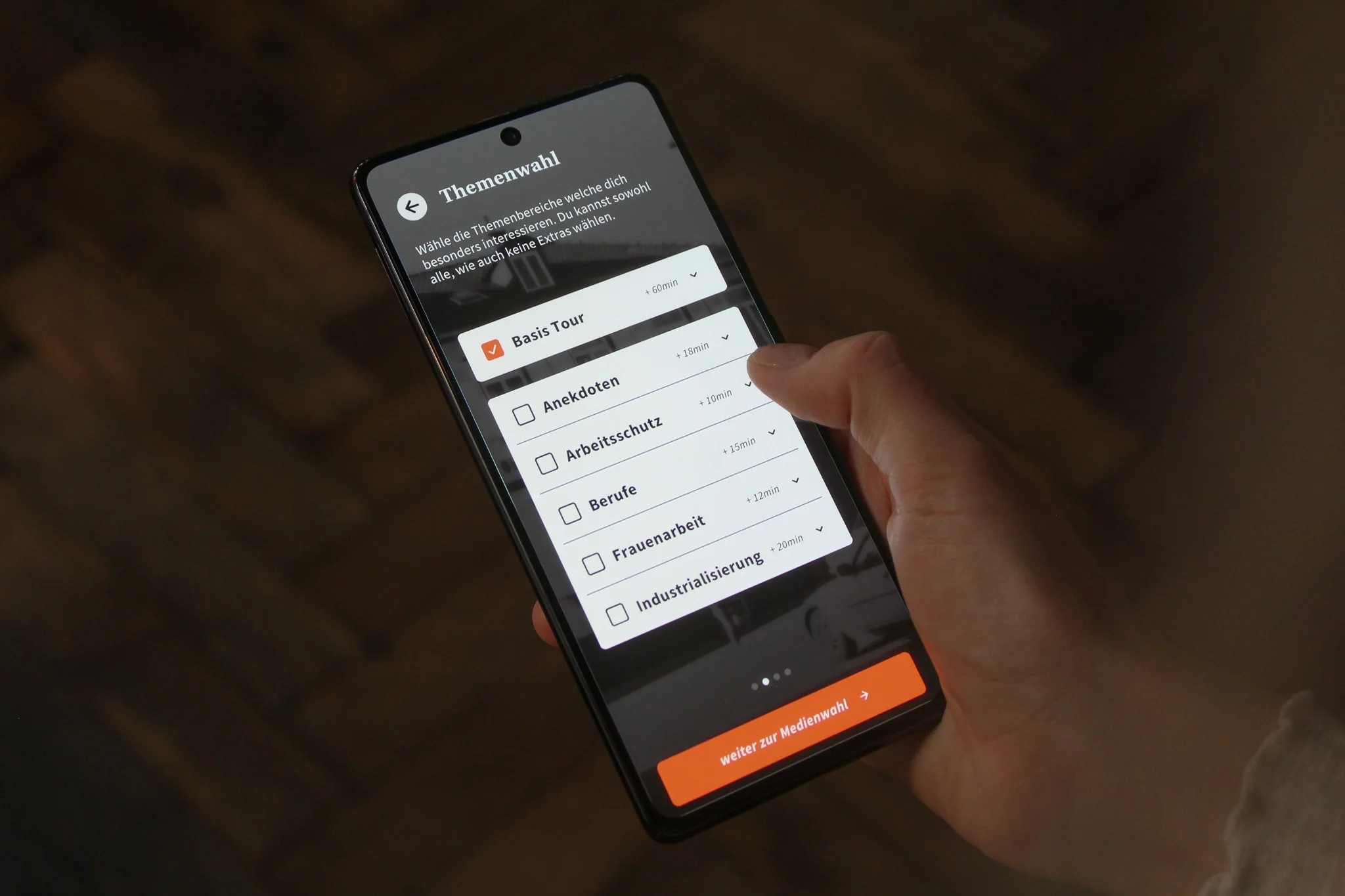
Onboarding
When opening the app, a start screen provides a short introduction to the former factory. Before museum visitors start the tour, the onboarding personalizes the application with regard to the themes and media playback. The selection is necessary to guarantee accessibility and to prepare visitors for what is to come.
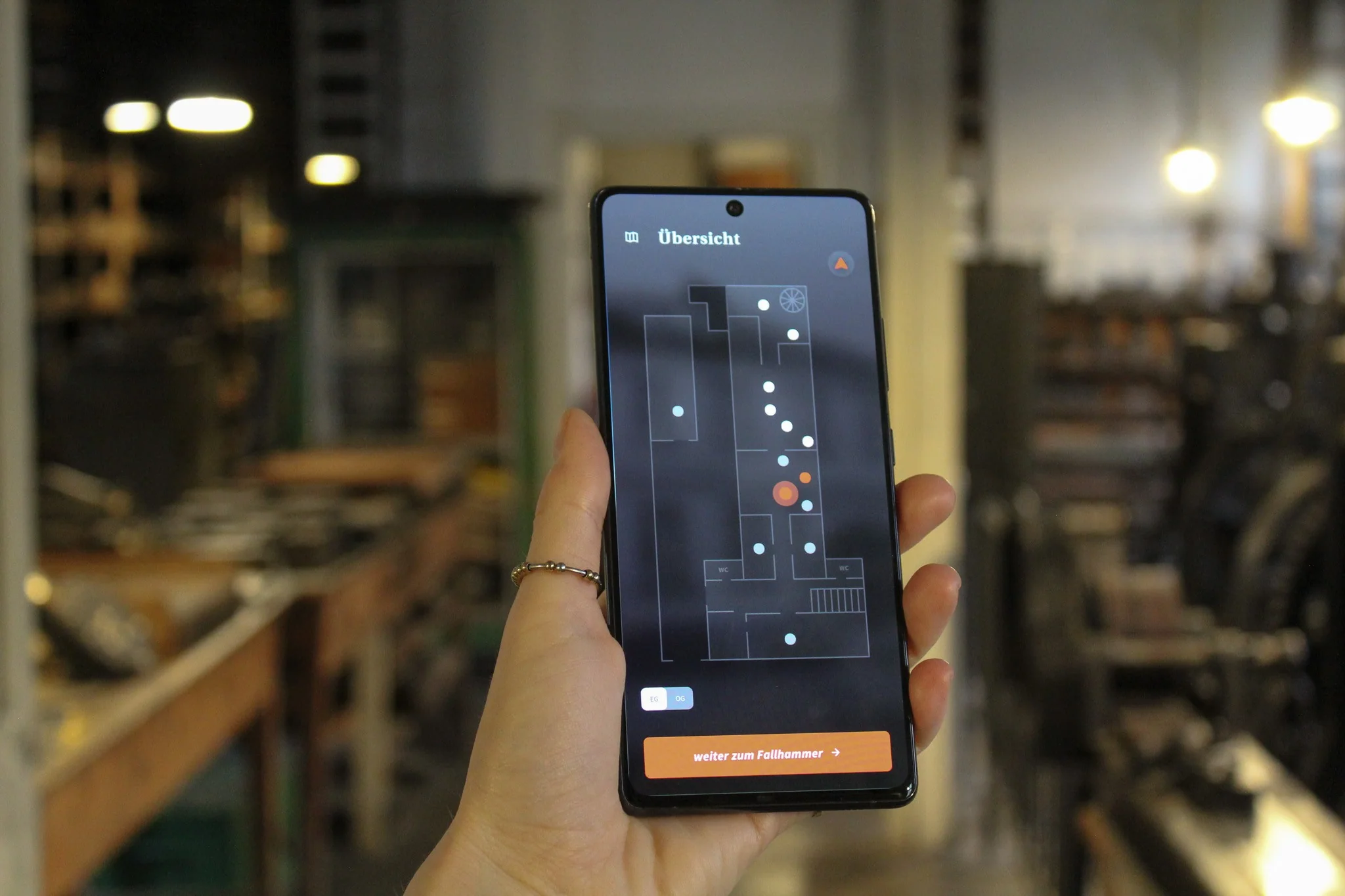
Card
Now users are taken to a map showing the floor plans of the factory's two floors. All stations can be called up again at any time with this map. A spatial assignment via the floor plan allows visitors to orient themselves within the tour.
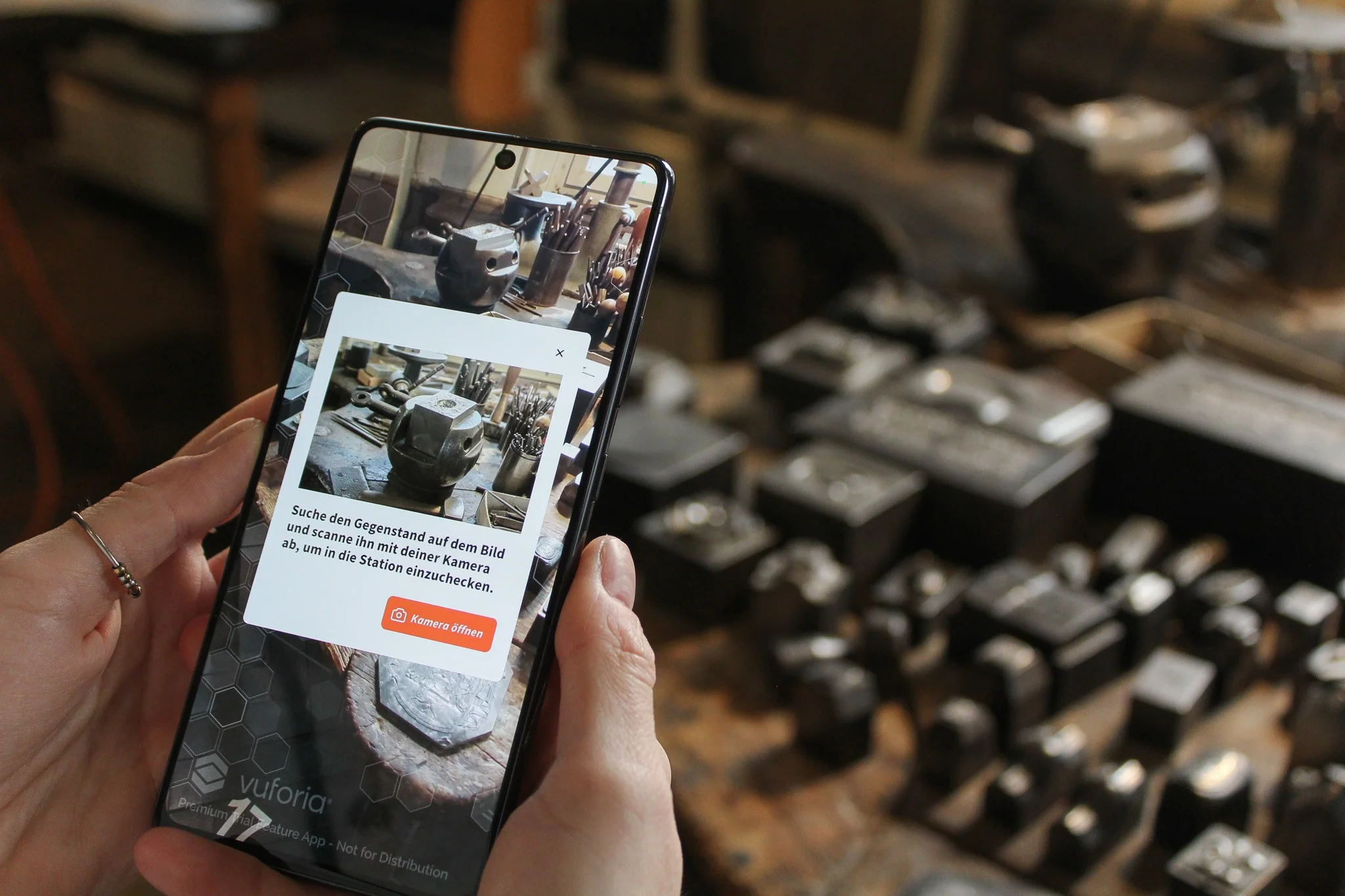
Check-in
In order to experience knowledge within the app, a check-in takes place at the beginning of each station, in which objects in the room must be found for the respective station. This controls the visitors' view of the exhibits. The check-in takes place via AR or NFC. A pop-up appears with instructions on the object to be found. If detected, the smartphone vibrates and the visitor is redirected to the respective content.
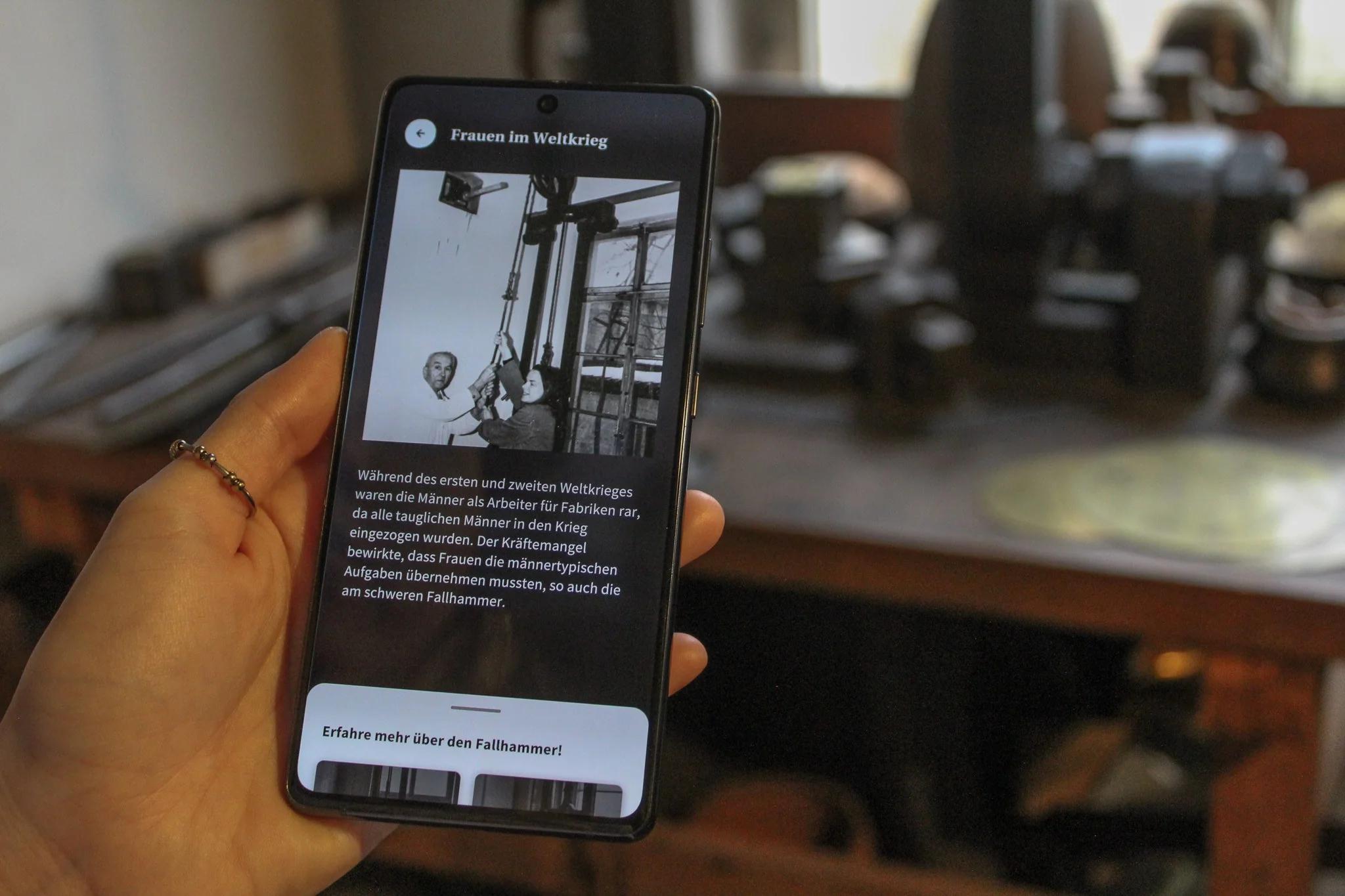
Text
Each station contains the text format in the general information. This briefly explains what purpose served the machines or workstations that can be seen. In the subtopics, depending on the individual, it is decided which areas contain the medium text and which ones switch to the following media audio, video and AR.
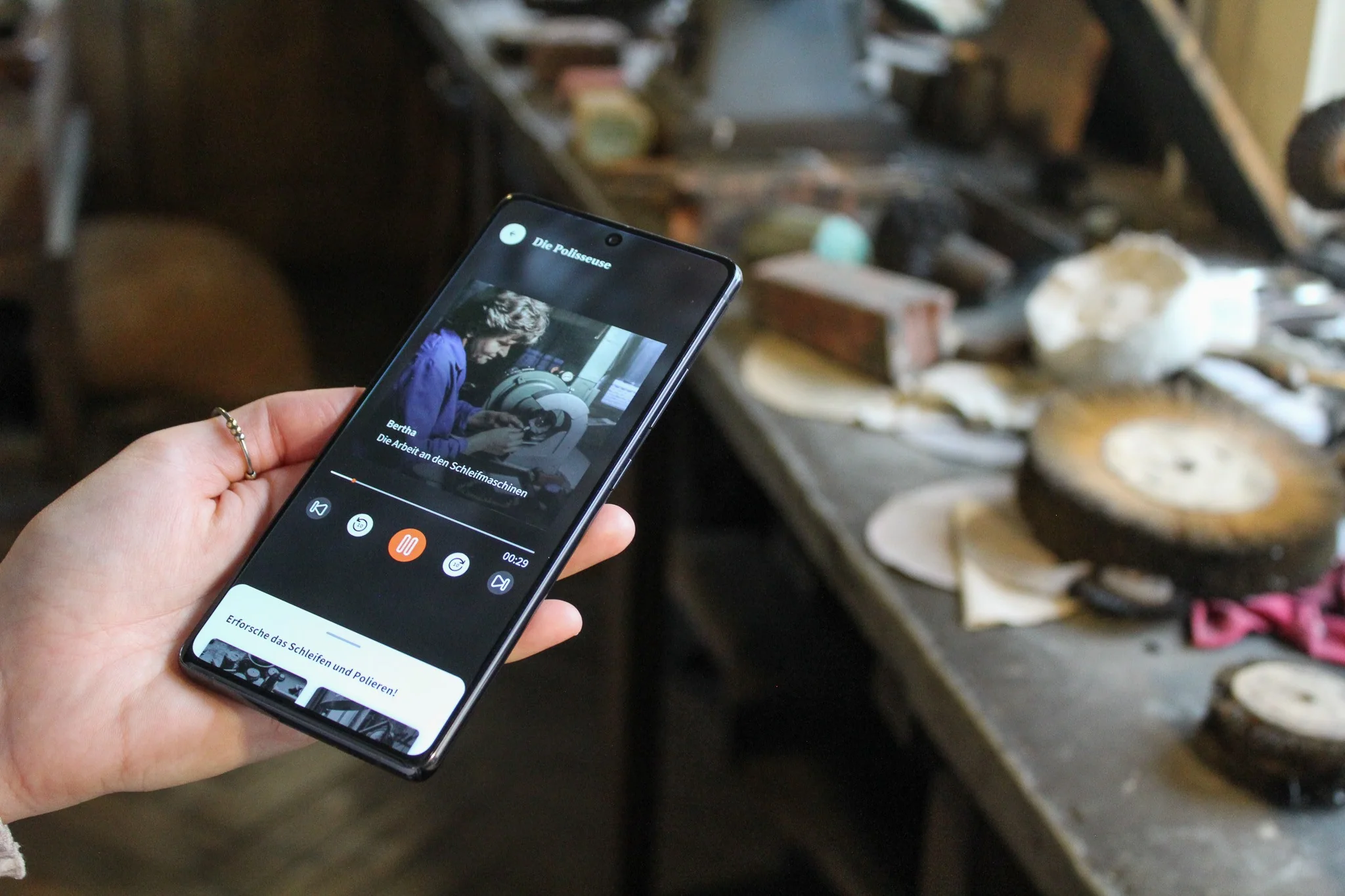
Audio
Sound offers the possibility to create visual perception, to underscore scenes, and to enrich the museum visit. During the thematic research, our team came across anecdotes and songs from workers that can be played to make the content transfer lively.
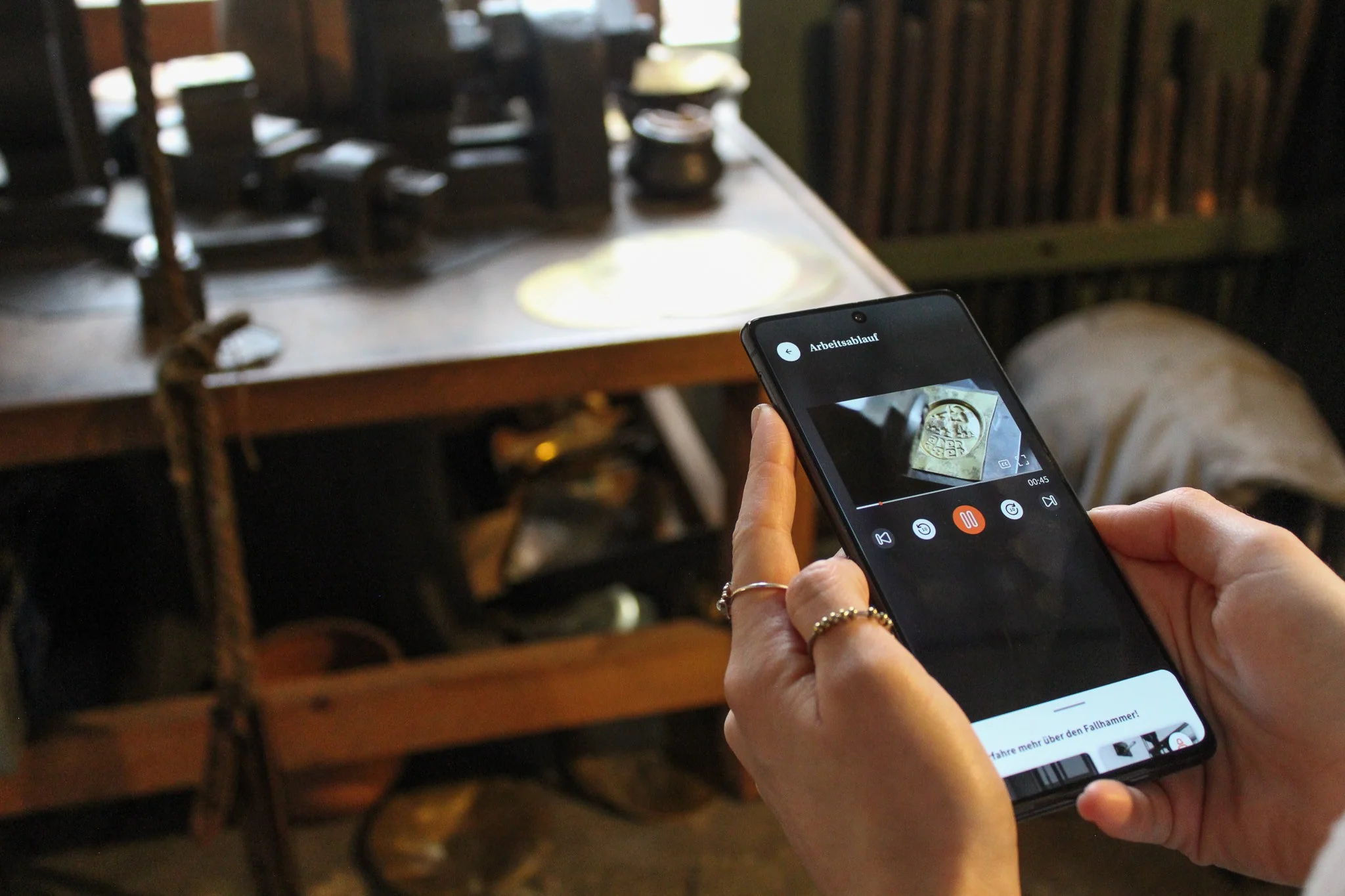
Video
This medium is used to show the work process. Since the machines cannot be put into operation in the original without staffing, a recording is used and a narrator explains the depicted processes.
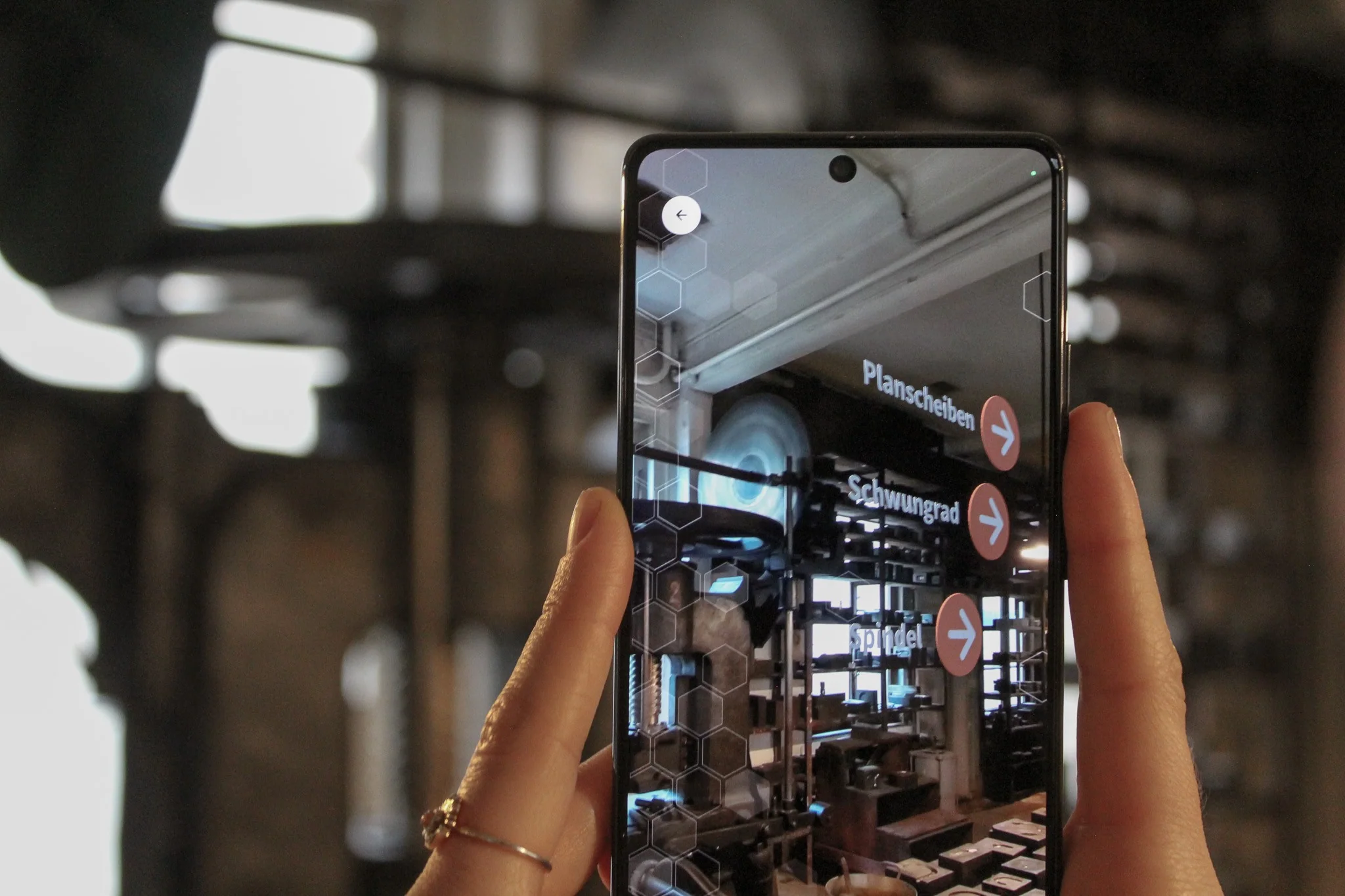
Augmented Reality
Augmented reality makes it possible to experience digital content by means of extensions of the real world. We see in the technology the possibility to preserve and protect the historic site in its original atmosphere and at the same time to make the content transfer exciting and modern. AR has positive effects on engagement and educational value, as by exploring the environment, visitors are actively involved in content delivery. This increases the sustainability of information intake. Visitors point their camera at the station and receive labels of the elements in the room. These can be explored deeper by clicking the button next to them, as a detailed description then appears in text format.
Podcast
In the course of the project exhibition, our team was invited to participate in a podcast. It's about connecting analog and digital worlds in the museum.