10.2020 – 02.2021
D.E.C.
DEC stands for deaf comunication and represents the invention of glasses for deaf people to communicate with each other and also hearing people.
- Invention Design
- Application Design
- User Interface
- Invention Design
- Application Design
- User Interface
Deaf people are unfortunately pushed into a marginalized group by society, which means there is little accessibility. A simple, non-distracting design should counteract this and completely remove the barriers for deaf people.
From already existing technologies we filtered out those that are able to enable communication between sign language and spoken language, but also between different sign languages.
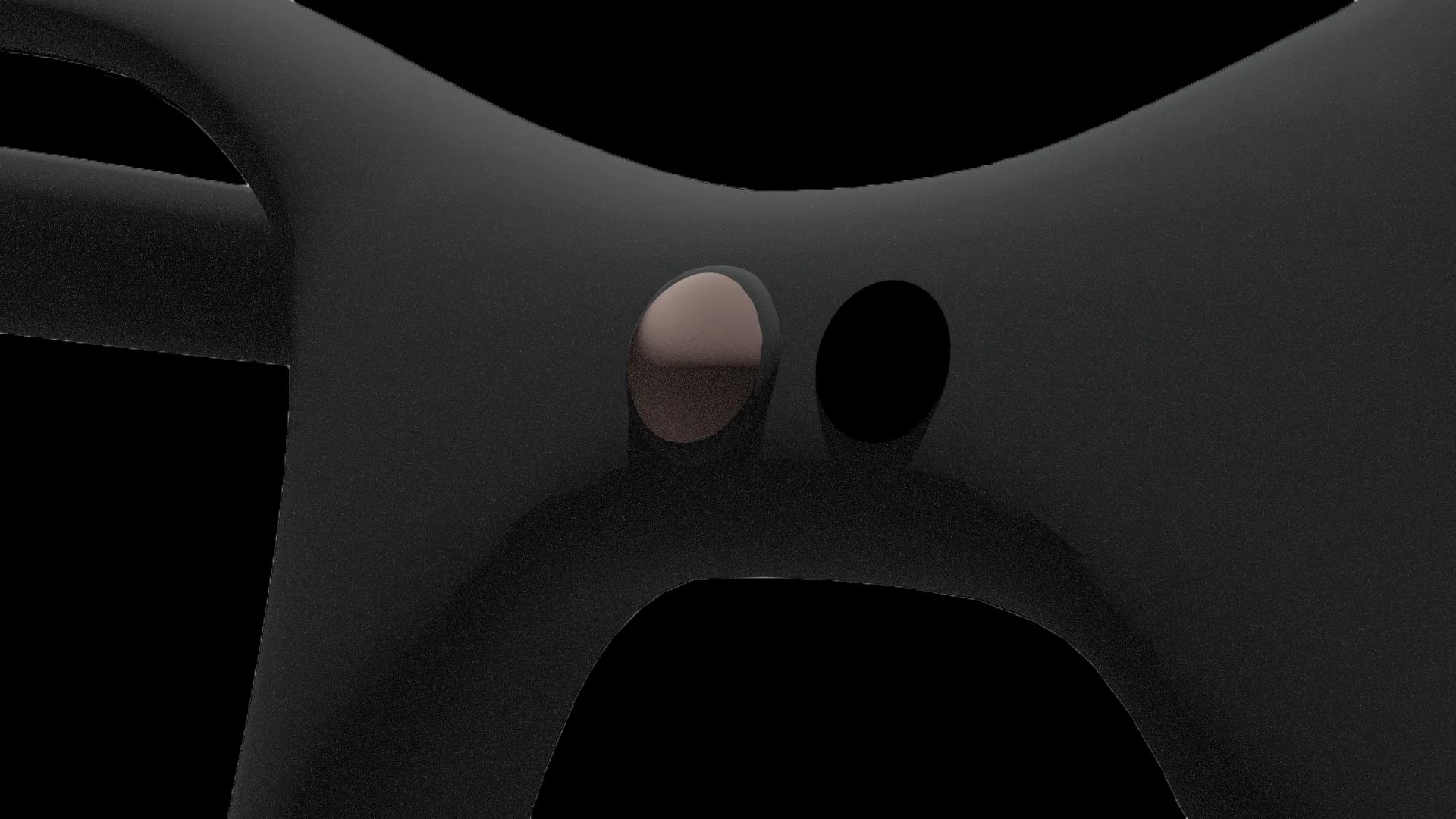
Camera and LiDAR Sensor
The camera and the LiDAR sensor are always directed in the direction of gaze above the nose between the two lenses. They detect the opposite mouth movements and gestures. These two components complement each other, because in low-light conditions, the LiDAR sensor acts adaptively.
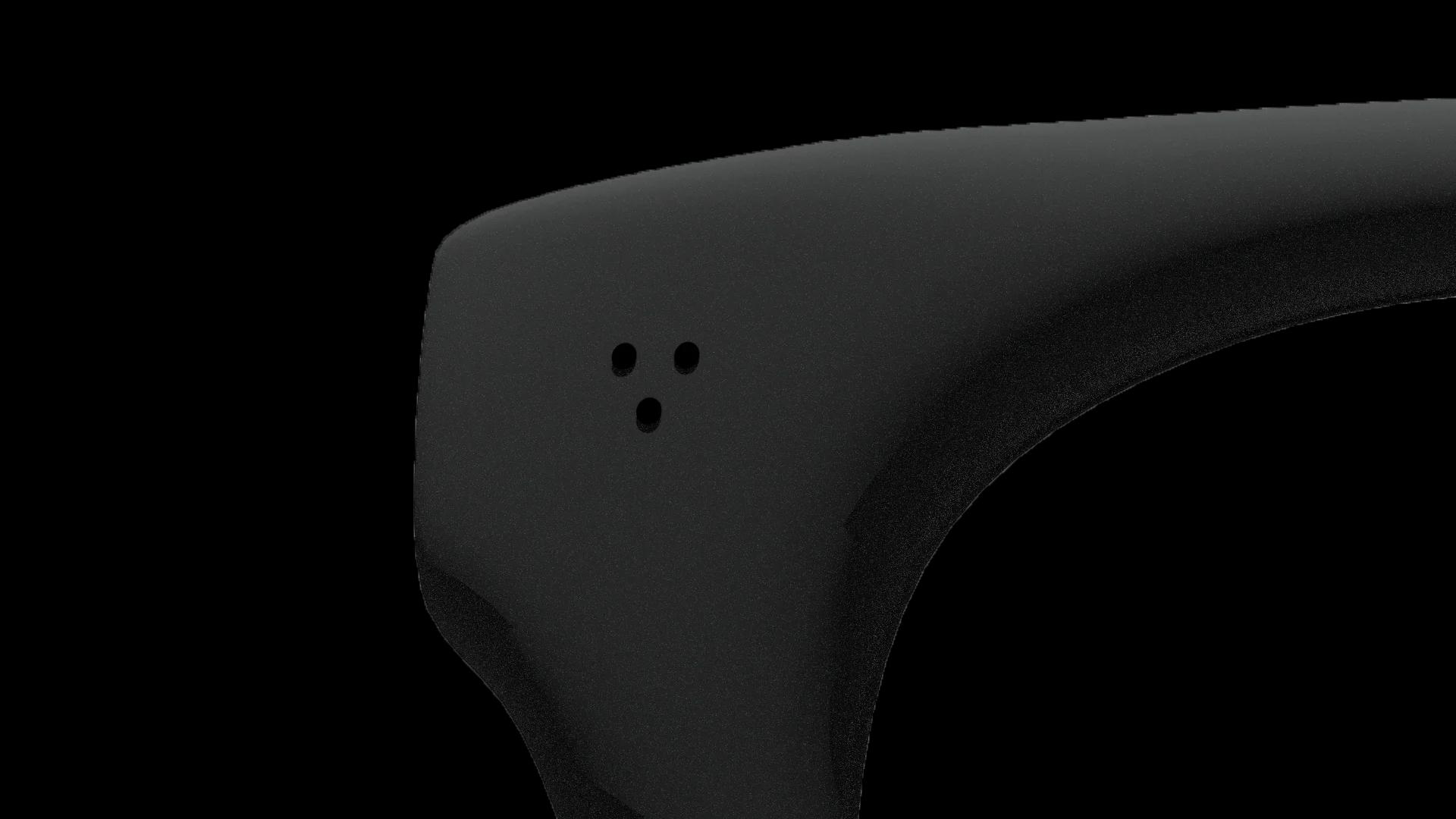
Microphone and Speaker Audio
The microphone and the speaker are used for sound recording and playback, that is for recognizing spoken language, and for outputting the translation of the user's own signs into spoken language. The microphone and the speaker are located in the upper corners of the frontal frame of the glasses and are also directed towards the viewing direction and thus towards the conversation partner.
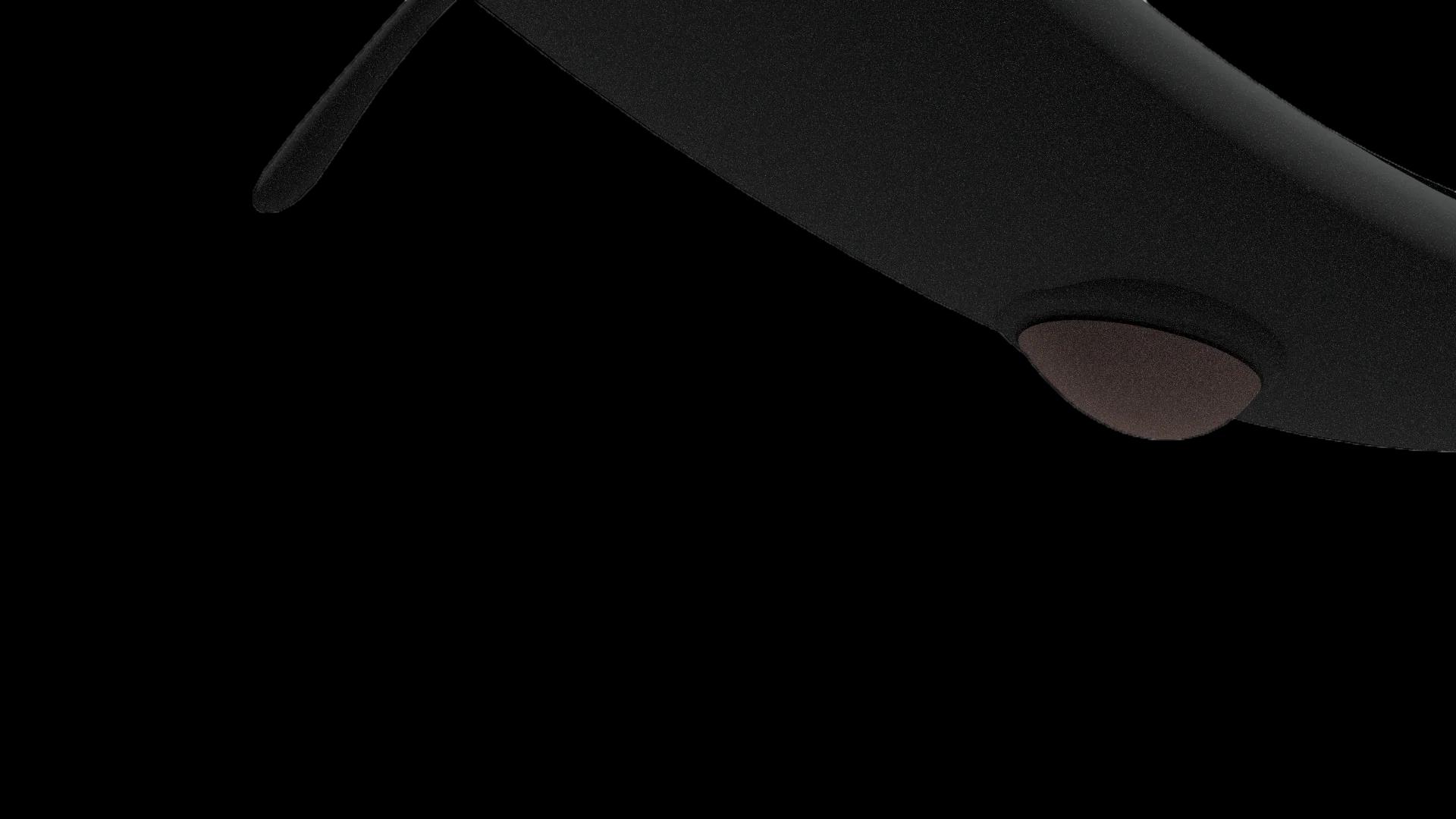
Infrared Camera
The two infrared cameras are located below the lenses on the frame and are directed downwards towards the user's arms, hands and fingers. These are used to detect the user's gestures.
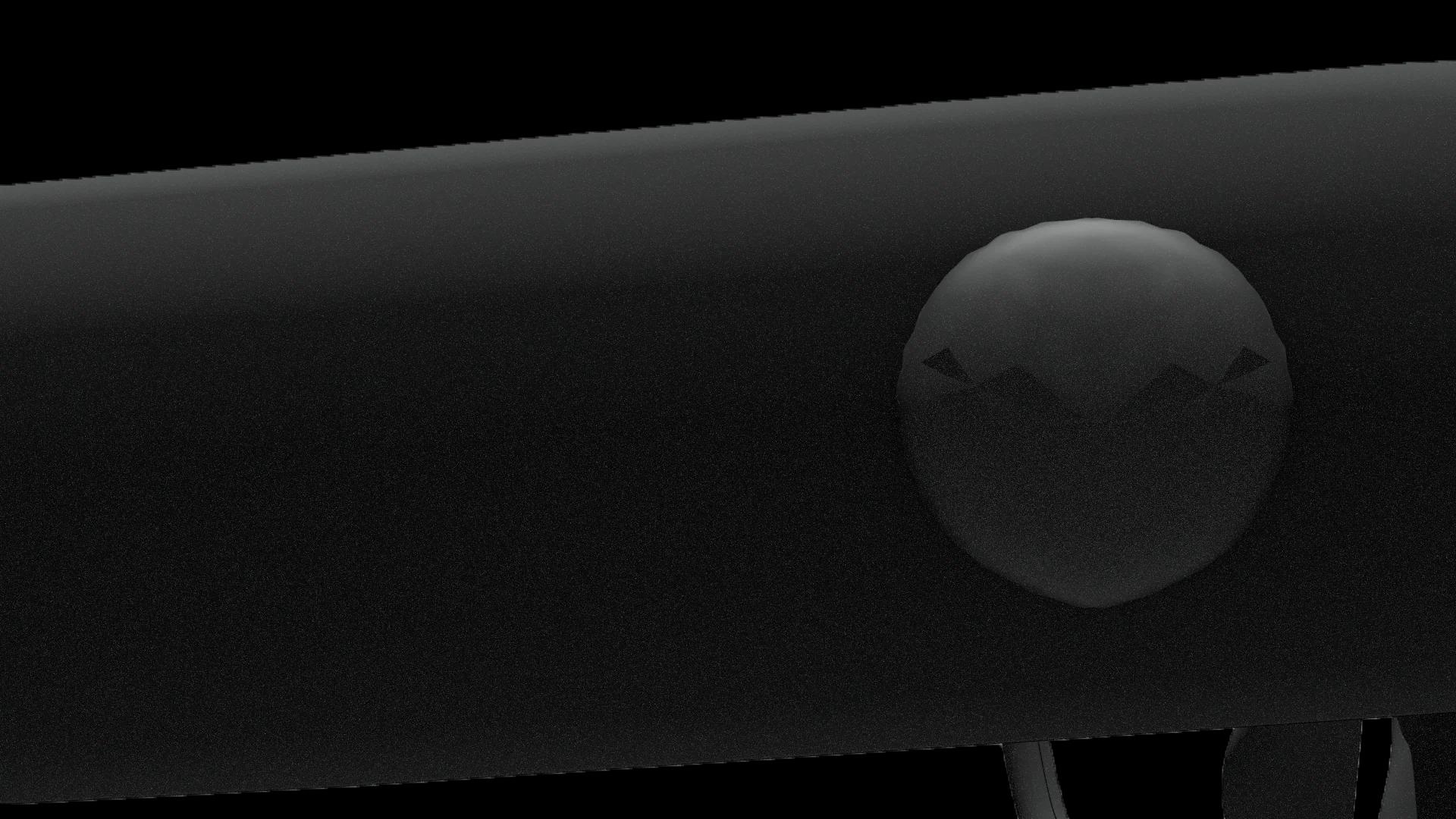
Battery and Button
The battery is built into the arms of the glasses, with the same configuration on both sides. There is also a mute button on the side, which can also be used as a power button when held longer.
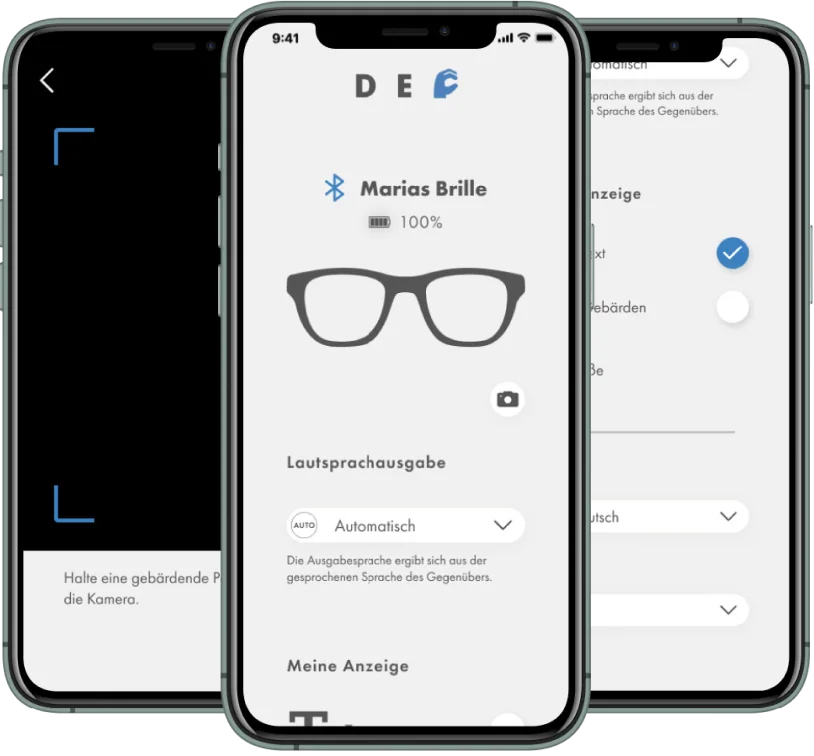
App
There is an associated application for the glasses. In this application, settings are made such as the language and dialect of the user, whether the output is text or gestures, and the output language for the conversation partner. Settings can only be made when the glasses are on in order to create an error tolerance.